

The satisfying thud of a dart hitting a sisal board is a sound recognised in pubs, social clubs, and arenas worldwide. But have you ever wondered where this iconic game came from? The journey is a long and fascinating one, transforming from a simple pastime for soldiers into a multi-million-pound global spectacle. This article delves into the rich history of darts, exploring the key moments that defined the sport we love today.
From its rudimentary beginnings to the high-stakes drama of the professional circuit, the evolution of darts is a story of skill, innovation, and community. We’ll look at how the dartboard got its unique numbering system, how the game was proven to be a sport of skill, and how television turned pub heroes into international superstars. The history of darts is more than just a timeline; it’s a reflection of social change.
The Humble Beginnings: Military Origins and Pub Culture
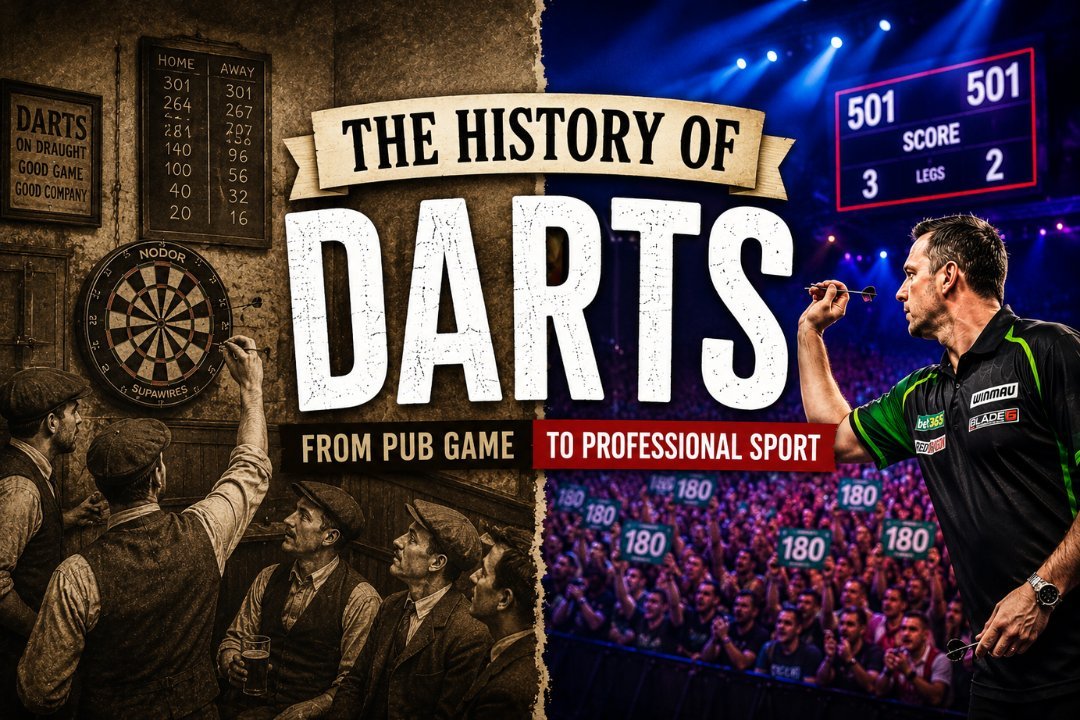
The earliest roots of the history of darts can be traced back to medieval England. The story goes that bored soldiers, looking for a way to pass the time between battles, started throwing shortened arrows or spearheads at the bottom of a wine cask or a slice of a tree trunk. The natural rings and cracks in the wood served as the first targets, creating a simple competition. This was a raw and early form of the game.
This pastime proved popular, and it’s even said that King Henry VIII was a fan, reportedly receiving a beautifully ornate set of darts from his second wife, Anne Boleyn. As the game moved indoors to escape the harsh English weather, it found its natural home: the pub. Publicans saw the potential of having a game that kept patrons entertained and, more importantly, buying drinks. The early dartboards were made of solid wood, usually elm, which had to be soaked overnight to heal the holes from the darts. This was a cumbersome process, but it laid the groundwork for the game’s explosion in popularity. The entire history of darts starts right here, in these simple, competitive settings.
The Birth of the Modern Dartboard and Rules
For darts to become a standardised sport, two things needed to happen: a consistent board and a fair set of rules. The history of darts saw its most significant innovations during the late 19th and early 20th centuries. These changes turned a simple throwing game into a complex challenge of precision and strategy.
A Stroke of Genius: The Numbering System
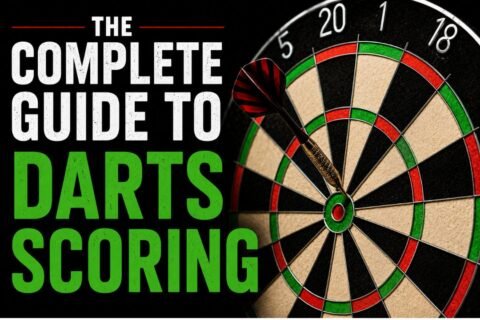
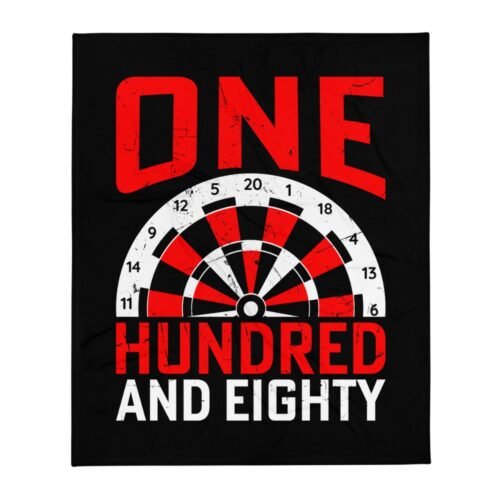
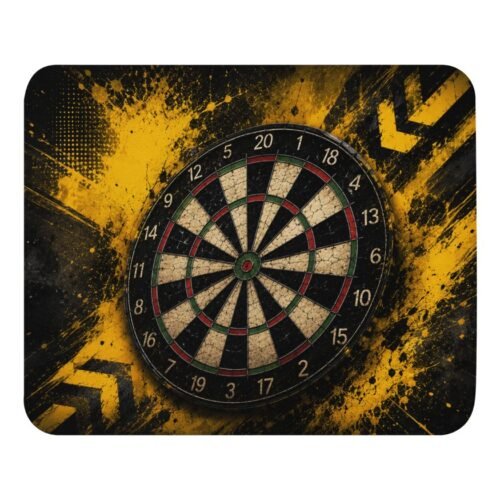
Have you ever looked at a dartboard and wondered why the numbers are arranged in such a seemingly random order? This layout is no accident. In 1896, a carpenter from Lancashire named Brian Gamlin is credited with creating the standard numbering sequence we use today. His goal was to penalise inaccuracy. By placing low numbers next to high numbers (like the 1 and 5 next to the 20), a sloppy throw is severely punished. This brilliant design rewards precision and makes the game a true test of skill, a pivotal moment in darting history.
From Wood to Bristle: A Material Revolution
The problem with wooden dartboards was their lack of durability. They dried out, cracked, and required constant maintenance. The game-changer came in 1935 when a company called Nodor (which stands for ‘no odour’, as their initial product was a modelling clay) developed the bristle dartboard. Using tightly packed sisal fibres from East Africa, this new board had a remarkable “self-healing” quality. When a dart is removed, the fibres part and then close back up. This innovation made boards last much longer and provided a consistent playing surface, which was essential for the growth of the sport. This technological leap is a cornerstone of the modern history of darts.
From a Game of Chance to a Game of Skill
A crucial turning point in the history of darts occurred in 1908. At the time, darts was considered a game of chance in many parts of the UK, meaning it was illegal to play it for money or prizes in pubs. A pub owner in Leeds, Foot Anakin, was taken to court for allowing darts to be played at his establishment. In a now-legendary courtroom demonstration, Anakin set up a dartboard. He declared he could hit any number named by the court. When a clerk called out ’20’, Anakin threw three darts, and all three landed in the 20 bed. To prove it wasn’t a fluke, he then challenged any court official to replicate his feat. The official tried and failed miserably. The magistrate was convinced, and the case was dismissed. Darts was legally declared a game of skill, not chance, paving the way for leagues and tournaments to flourish across the country.
The Professional History of Darts: Television and Superstars
While darts was hugely popular at an amateur level for decades, its transformation into a professional spectator sport began in earnest with television. The first major tournament, the News of the World Championship, ran from 1927, but it was the 1970s and 80s that became the golden age. With television broadcasting in colour, the larger-than-life personalities of players like Eric Bristow (‘The Crafty Cockney’), John Lowe, and Jocky Wilson became household names. Their skill and charisma drew millions of viewers, and the prize money began to grow.
The most significant event in the modern history of darts was ‘The Split’ in 1992/93. A group of top players, unhappy with the game’s declining TV coverage under the British Darts Organisation (BDO), broke away to form their own organisation, which would become the Professional Darts Corporation (PDC). Backed by satellite broadcaster Sky Sports, the PDC transformed the sport. They introduced glamorous walk-ons, enthusiastic crowds, and massive prize funds. Players like Phil ‘The Power’ Taylor, who dominated the sport for two decades, became global superstars. Today, the PDC tour is a worldwide phenomenon, with players from all over the globe, including the Netherlands, Germany, and Belgium, competing for millions in prize money. This professionalisation has cemented the game’s place as a top-tier international sport.
Explore Our Collection of Darts Merchandise
Celebrate the History of Darts with Dartsmerchandise.com
The journey from a soldier’s pastime to a global professional sport is a testament to the enduring appeal of darts. It’s a game of precision, mental fortitude, and passionate community. At Dartsmerchandise.com, we share that passion. We are the specialist in darts merchandise, offering a wide range of products for every fan of the arrows. We celebrate the rich history of darts through our unique designs on t-shirts, hoodies, mugs, and more.
Please note: We create our own original designs inspired by the world of darts. We are dedicated to providing high-quality, creative products for fans and do not sell official player merchandise. Whether you’re a pub player, a league competitor, or an armchair fan watching the world championship, we have something for you to show your love for this incredible sport. Explore our collection and wear your passion with pride.
Frequently Asked Questions (FAQ)
Who invented the game of darts?
There is no single inventor of darts. The game evolved over centuries, with its origins widely believed to be from English soldiers in the medieval era throwing shortened arrows at tree trunks for practice and entertainment. The modern version we play today is the result of gradual developments over time.
Why is a dartboard numbered in that specific order?
The standard numbering layout is credited to a Lancashire carpenter named Brian Gamlin in 1896. He designed it to be a test of skill by placing low-value numbers next to high-value ones. This arrangement punishes inaccurate throws, for example, if you aim for 20 and miss slightly, you’ll hit a 1 or a 5.
When did darts become a professional sport?
While tournaments existed for many years, darts truly began its journey to professionalism in the 1970s and 1980s with widespread television coverage. However, the formation of the Professional Darts Corporation (PDC) in 1992 is seen as the key moment that turned it into the major global professional sport it is today, with huge prize funds and international television deals.
What are modern dartboards made of?
Modern, high-quality dartboards are made from sisal fibres. Sisal is a stiff natural fibre that is tightly compressed to form the board. The key benefit is that it is ‘self-healing’ – when you remove a dart, the fibres close back up, ensuring the board has a long lifespan and a consistent playing surface.
Is darts legally considered a game of skill or luck?
Darts is legally considered a game of skill. This was established in a famous court case in Leeds, UK, in 1908. A pub owner proved to a judge that hitting a specific target on the board required skill, not luck, by successfully demonstrating his accuracy in the courtroom. This ruling allowed darts leagues and tournaments to flourish legally.